
Cornerstone Conversation
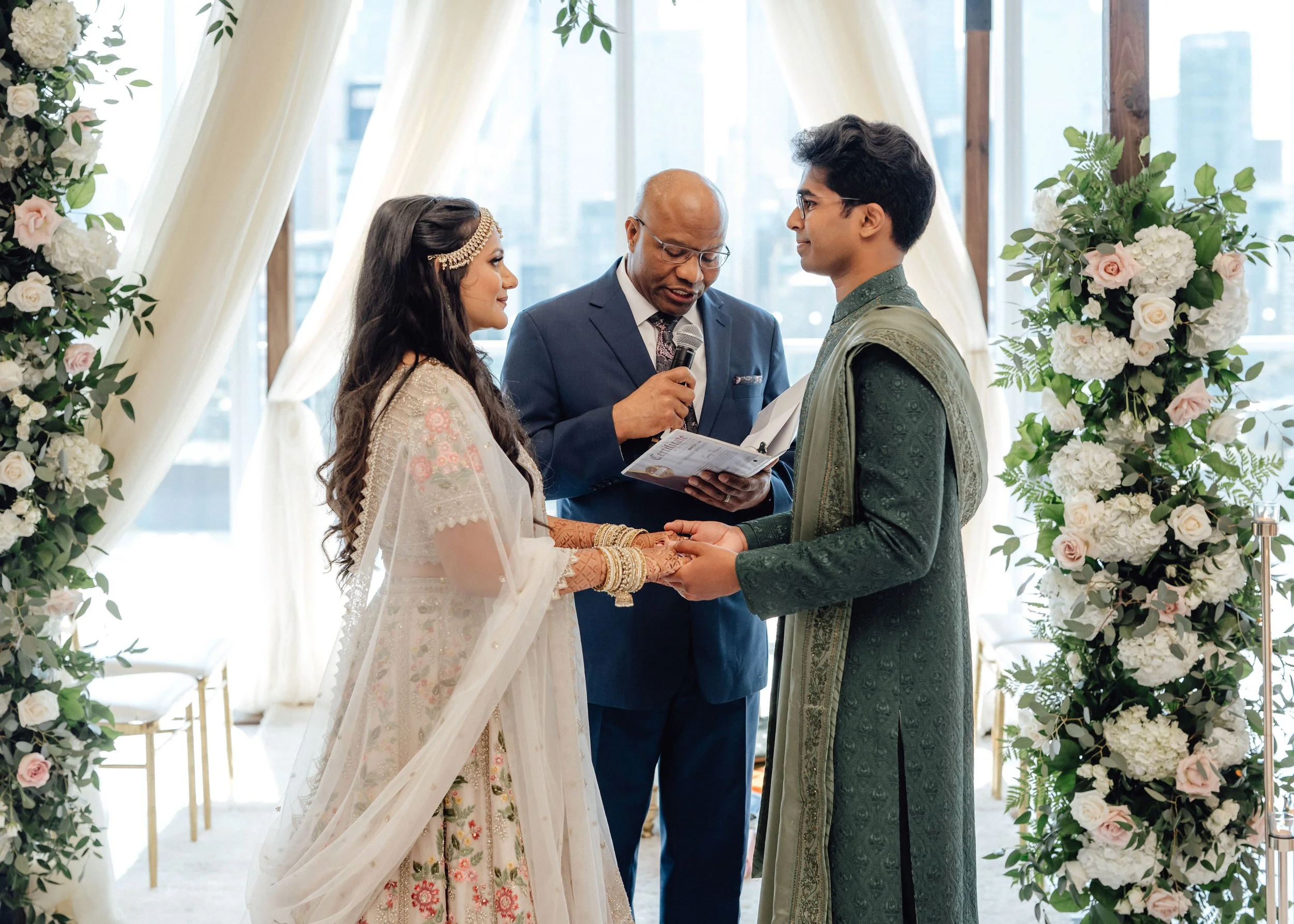
A Hindu and Christian fusion wedding at The Globe and Mail Centre in Toronto, photography by Matt Besenyodi Photography
Planning two wedding ceremonies and a reception on the same day is actually achievable, and it's something we've done many times at Events by Whim. For couples bringing together different cultures or faiths, a single-day celebration can be a wonderful way to honour both traditions while keeping the festivities within one day. Naturally, these weddings require additional consideration when it comes to developing the itinerary. Different ceremony lengths, religious requirements, outfit changes, photography, guest hospitality, and room transformations all need to be accounted for, alongside the usual demands of a wedding day.
We generally favour hosting both ceremonies and the reception at the same venue, particularly when a venue offers multiple event spaces and potential accommodations for the couple and their guests. This makes the transitions easier to manage and reduces the amount of time spent travelling between locations. Venues such as the Globe and Mail Centre can also provide an excellent setting for a multicultural celebration when the available spaces and event logistics support the proposed itinerary.
With the right preparation, the day can flow beautifully. Here are some of the considerations we work through with our couples when planning a multicultural wedding with two ceremonies in one day.
Start Building Your Wedding Timeline Before Booking the Venue
We begin developing a base wedding-day itinerary very early in the planning process, even before the venue has been confirmed. At this stage, we're looking at the major milestones rather than every individual detail. We want to understand the anticipated ceremony lengths, the couple's preferences for photography and attire, the reception schedule, and whether the venue can accommodate the transitions required throughout the day.
Having this framework in place helps us assess whether a particular venue is suitable for the celebration. For example, if both ceremonies require significantly different setups, we'll need to know whether the venue has enough space and time for a room transformation. If the ceremonies are taking place in different locations, we'll need to consider travel time and how that affects the rest of the schedule and the guest experience.
Couples often have a strong preference for hosting their celebrations either over one or two or more days before they begin booking vendors. Our role is to help them understand how the decision on the number of days translates into a realistic itinerary, including the compromises that may be necessary to make everything work comfortably.
How We Build a Two-Ceremony Wedding Timeline
At Events by Whim, we typically work backwards from the reception when building a wedding-day timeline. We begin by establishing the cocktail hour start and end times, when guests will be seated for dinner, and when the first course should be served. These milestones provide the framework for the rest of the evening.
From there, we determine when the second ceremony needs to begin and end, followed by the time required for refreshments, outfit changes, and any transformation of the ceremony space. We then establish the first ceremony's timing and work backwards through family portraits, the couple's first look, getting-ready photography, hair and makeup, and the media team's arrival. Travel time is incorporated wherever the couple, guests, or vendors need to move between locations - even if those locations are within the same building. You’d be surprised how long it takes to move guests from one room to another, and not accounting for that time can squeeze a timeline considerably.
This exercise gives us a clearer understanding of how early the day needs to begin and where more time buffering may be necessary. We've planned weddings where the bride's hair and makeup schedule needed to begin as early as 1 a.m. to accommodate the day's events. While that is an exceptionally early start, some couples are comfortable with it because they prefer a single-day celebration to the additional commitments of a multi-day wedding. We talk about these implications early so our couples can make informed decisions about the experience they want to create.
Understanding the Time Required for Each Ceremony
Ceremony lengths can vary a lot, even within the same religion. A Hindu ceremony can last an hour or several hours depending on the traditions being observed, the officiant, and the couple and family's preferences on what is being included. A Catholic ceremony incorporating Goan or Tamil cultural traditions may have different elements and timing requirements from an Italian Catholic ceremony. A Nikkah can be relatively brief, although celebrations incorporating a sofreh aghd or other cultural rituals might require more time.
We like to encourage couples to discuss the specific structure of each ceremony with their officiants and families early on. This helps us develop a timeline based on the actual rituals being performed and lets us account for any additional traditions, processions, or family participation.
The order of ceremonies is another decision we work through together. From a planning perspective, we might suggest scheduling the longer ceremony first, especially if the second ceremony can then flow directly into cocktail hour and the reception. That said, religious/cultural requirements, family preferences, and attire can all end up influencing the final decision. For example, if the couple plans to wear the same outfit for their second ceremony and reception, scheduling that ceremony last may eliminate an extra outfit change and simplify the transition into the evening.
We also encourage our couples to discuss which ceremony will include the legal marriage signing. This can be a surprisingly emotional decision, much more than they anticipate, especially when both ceremonies are equally meaningful to them and their families. Any legal or officiant requirements should be confirmed in advance.
Why We Usually Recommend a First Look
When two ceremonies lead directly into cocktail hour and the reception, completing the majority of formal photography beforehand makes the day a lot more comfortable and unhurried from a timing perspective. As a result, we almost always recommend a first look before the first ceremony, assuming it aligns with the couple's preferences and traditions. This then lets us schedule the couple's portraits and immediate family photos earlier in the day, when everyone is dressed and ready.
There are usually still more family photographs or portraits between ceremonies, especially if the couple changes outfits. That said, having most of the formal photography finished before the first ceremony gives us more flexibility later in the day and gives the couple a chance to spend more time enjoying their wedding. Remember, you can’t have great candid photos if you don’t have time to be in the moment!
For couples who want to see each other for the first time during the ceremony, this is definitely doable. It usually requires a longer break between ceremonies or more portrait time during cocktail hour, depending on the overall itinerary.
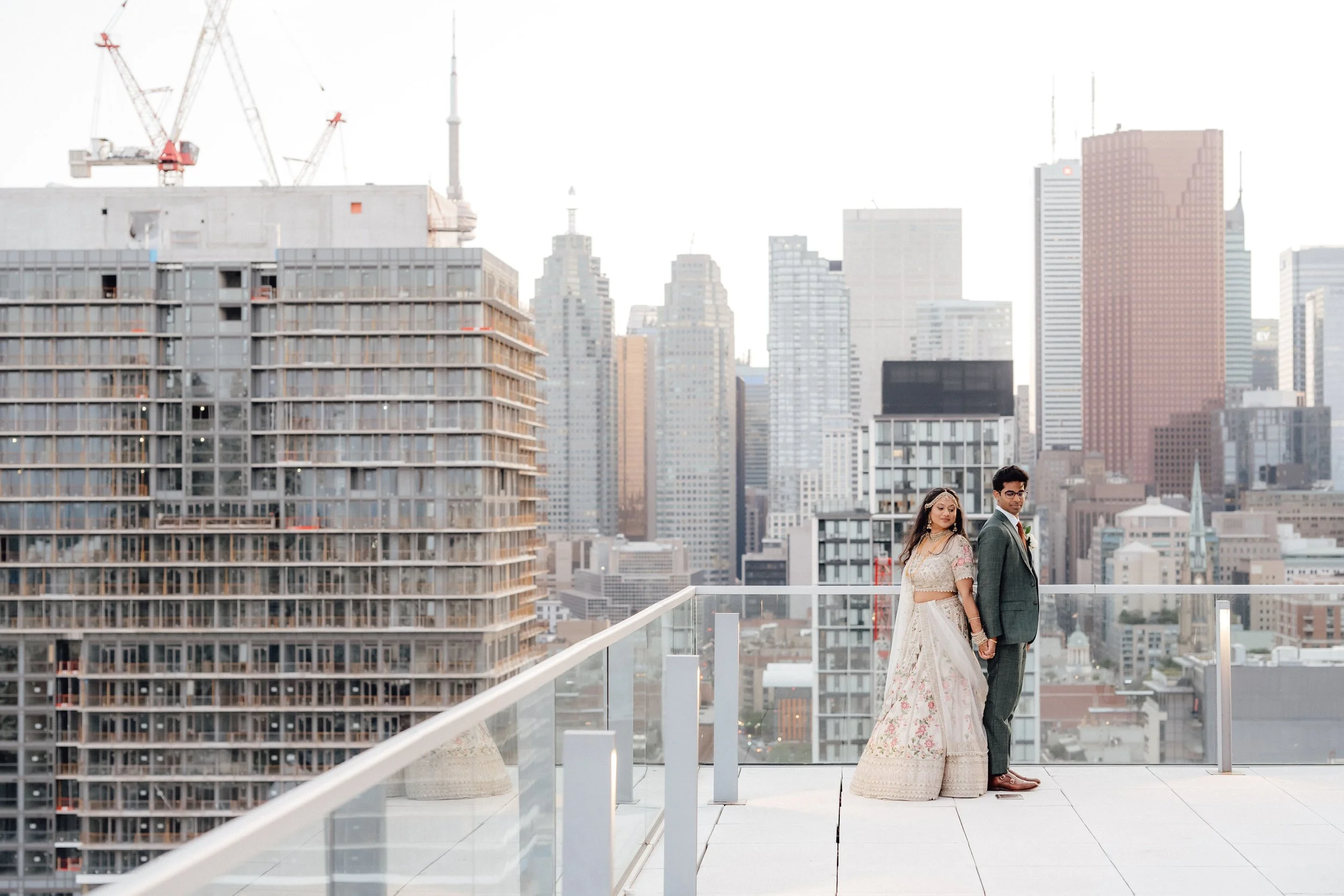
Our sweet couple during their multi-faith wedding at the Globe and Mail Centre in Toronto. Photography by Matt Besenyodi.
Great Guest Hospitality Between Ceremonies is a Must
We recommend allowing about 30 to 45 minutes between ceremonies. It's enough time for guests to stretch their legs, grab a coffee or tea, enjoy a little something to eat, and settle in before the next ceremony begins. This is also a great chance to extend a little hospitality to your guests without necessarily hosting a full cocktail hour. Coffee, tea, pastries, or a few light bites are usually plenty. If one of your ceremonies is Hindu, we’d recommend keeping the refreshments vegetarian and non-alcoholic, depending on your traditions and religious observances.
The break is just as helpful for the couple! Whether you need to change outfits, touch up your makeup, grab a quick bite, or just sit down for a few minutes in silence, having that breathing room built into the schedule makes a difference. Of course, there's nothing wrong with a longer break, especially if you're hosting your wedding at a hotel where guests can head back to their rooms. In our experience, though, those longer breaks tend to work better once both ceremonies have finished, before everyone reconvenes for the reception.
At the end of the day, we want the wedding to be as comfortable as possible for everyone. A little downtime is great, but several hours between ceremonies without somewhere for guests to go can make the day feel unnecessarily long and disjointed for your guests. Thoughtful timing, along with a little hospitality, goes a long way toward keeping everyone engaged throughout the celebrations and ready for more.
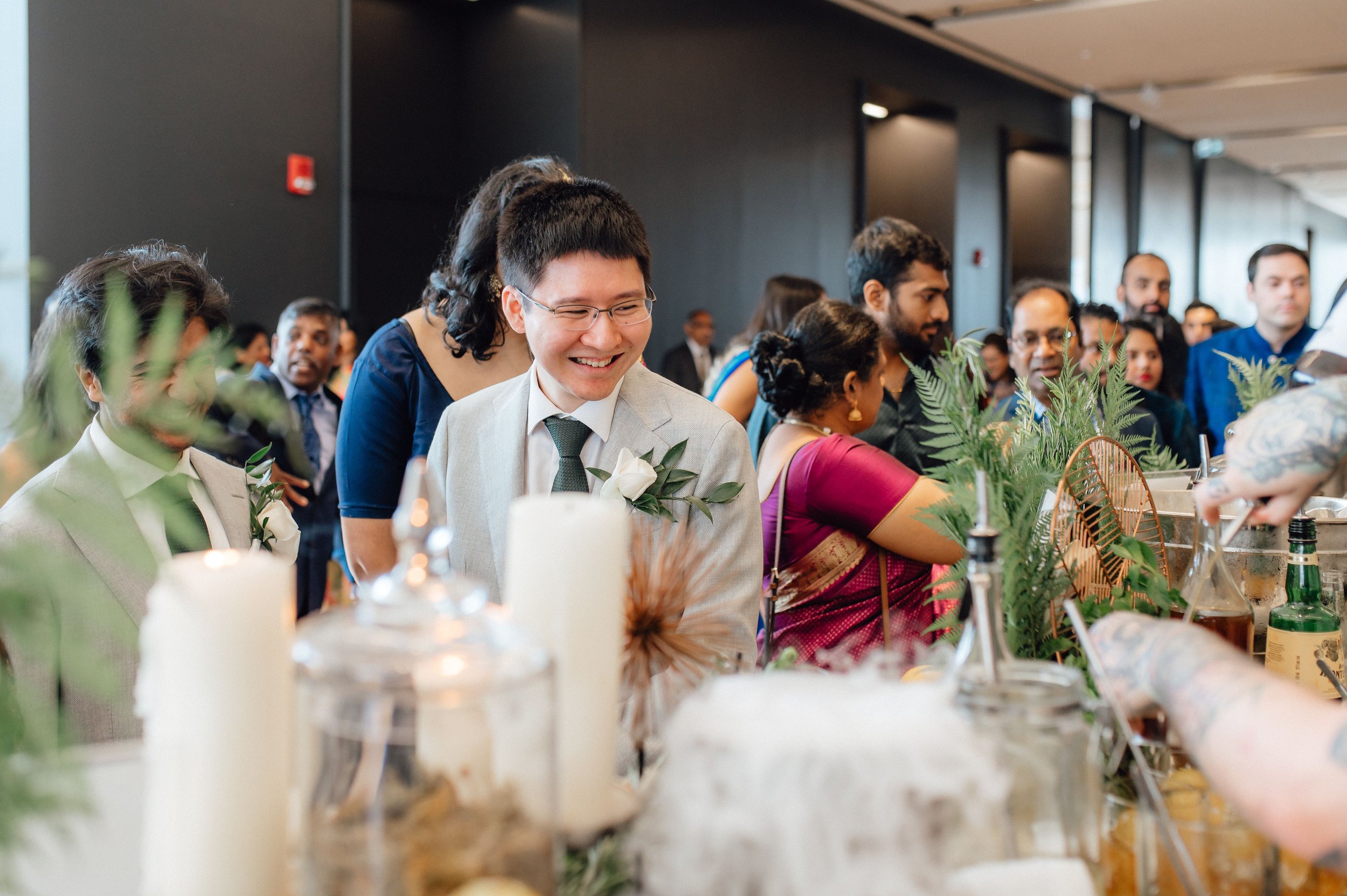
Between two wedding ceremonies, guests enjoy light refreshments at the Globe and Mail Centre. Photos by Matt Besenyodi.
Planning out the Ceremony Room Flip
If you're planning to have both ceremonies in the same space, the room flip is something we need to think about early in the design process. It's important to consider not only how each ceremony will look, but also what needs to happen between them and how much time we'll have to make those changes.
For example, transitioning from a Hindu ceremony to a Christian or officiant-led ceremony might mean removing ceremonial furniture, carefully relocating the havan, tidying up the stage, and adjusting the seating. The havan needs particular attention, as it can be very hot for quite some time after the ceremony.
For a simple transformation, we’d allow around 30 minutes. If the design involves larger installations, more elaborate décor, or significant furniture movement, we'll need to build in some extra time. The same applies in reverse if we're introducing Hindu ceremonial elements after a Christian or officiant-led ceremony. We also recommend having guests step out of the ceremony space while the room flip happens. This is a great time to offer some light refreshments in another area of the venue, giving guests a chance to mingle while our planning and décor teams work behind the scenes.
This is why we think through the ceremony designs, venue layout, vendor access, and wedding itinerary together from the beginning. We want both ceremonies to feel beautiful and intentional, without guests having to watch furniture being moved around or wonder what's happening next. With the right planning, that transition can look effortless, even when there's quite a lot happening behind the scenes.
Sample Wedding Timeline for Two Ceremonies in One Day
We had the pleasure of planning a beautiful multi-faith South Asian wedding at the Globe and Mail Centre in Toronto, where our couple celebrated both their Hindu and Christian traditions on the same day.
For this wedding, we had to carefully consider how both ceremonies would fit into the day while giving each one the time and attention it deserved. This meant working through the timing and requirements of both ceremonies, coordinating with the officiants, allowing enough time for beauty refreshes, and planning the transition between the two celebrations. We also wanted to make sure guests attending both ceremonies were comfortable throughout the day, with chances to enjoy refreshments and take a break before the next part of the wedding began.
To give you an idea of how a wedding like this can come together, we've included a high-level sample itinerary below showing how a Hindu ceremony, Christian ceremony, and evening reception can all fit into one day. While this isn't the exact timeline from our Globe and Mail Centre wedding, it's developed by the real considerations and experience that went into planning that specific wedding.
6:00 a.m. | Hair and Makeup Begins
Hair and makeup services begin for the couple and wedding party.
9:30–11:00 a.m. | Individual and Family Portraits
Personal portraits of each partner, along with their respective families and wedding parties, before the first look.
11:30 a.m. | First Look & Couple Portraits
The couple shares their first look before heading into portraits.
12:30–2:00 p.m. | Wedding Party and Family Portraits
Wedding portraits with the couple, their families, and wedding party.
2:10–2:30 p.m. | Private Downtime for the Couple
A little breathing room to freshen up, have a snack, and prepare for the ceremonies.
2:30–4:00 p.m. | Shortened Baraat & Hindu Ceremony
The first ceremony of the day.
4:00–4:30 p.m. | Guest Refreshments and Ceremony Transition
Guests enjoy light refreshments while the planning and décor teams prepare the space for the next ceremony.
4:30–5:00 p.m. | Christian Ceremony
The second ceremony of the day.
5:00–6:30 p.m. | Cocktail Hour, Outfit Changes, and Additional Portraits
Guests enjoy cocktail hour while the couple changes outfits and takes any remaining portraits.
6:30 p.m. | Reception Doors Open
Guests are welcomed into the reception space.
7:10 p.m. | Dinner Service Begins
Dinner service begins.
A schedule like this works really well when we can get most of the formal photos out of the way before the ceremonies begin. It also gives us enough time between ceremonies to make any changes to the space without rushing the process.
Of course, every wedding is a little different! The timing will depend on the traditions being celebrated, how long each ceremony takes, the couple's outfit changes, and what's possible at the venue. If you're planning a longer Hindu ceremony, for example, we may need to start earlier in the day or adjust the schedule to make sure everything has enough breathing room.
There are also plenty of little details happening behind the scenes, from coordinating vendor arrival and setup times to making sure refreshments are ready for guests during the transition between ceremonies. These are all things we work through during the planning process so that the day flows comfortably, without guests feeling rushed or spending too much time waiting around.
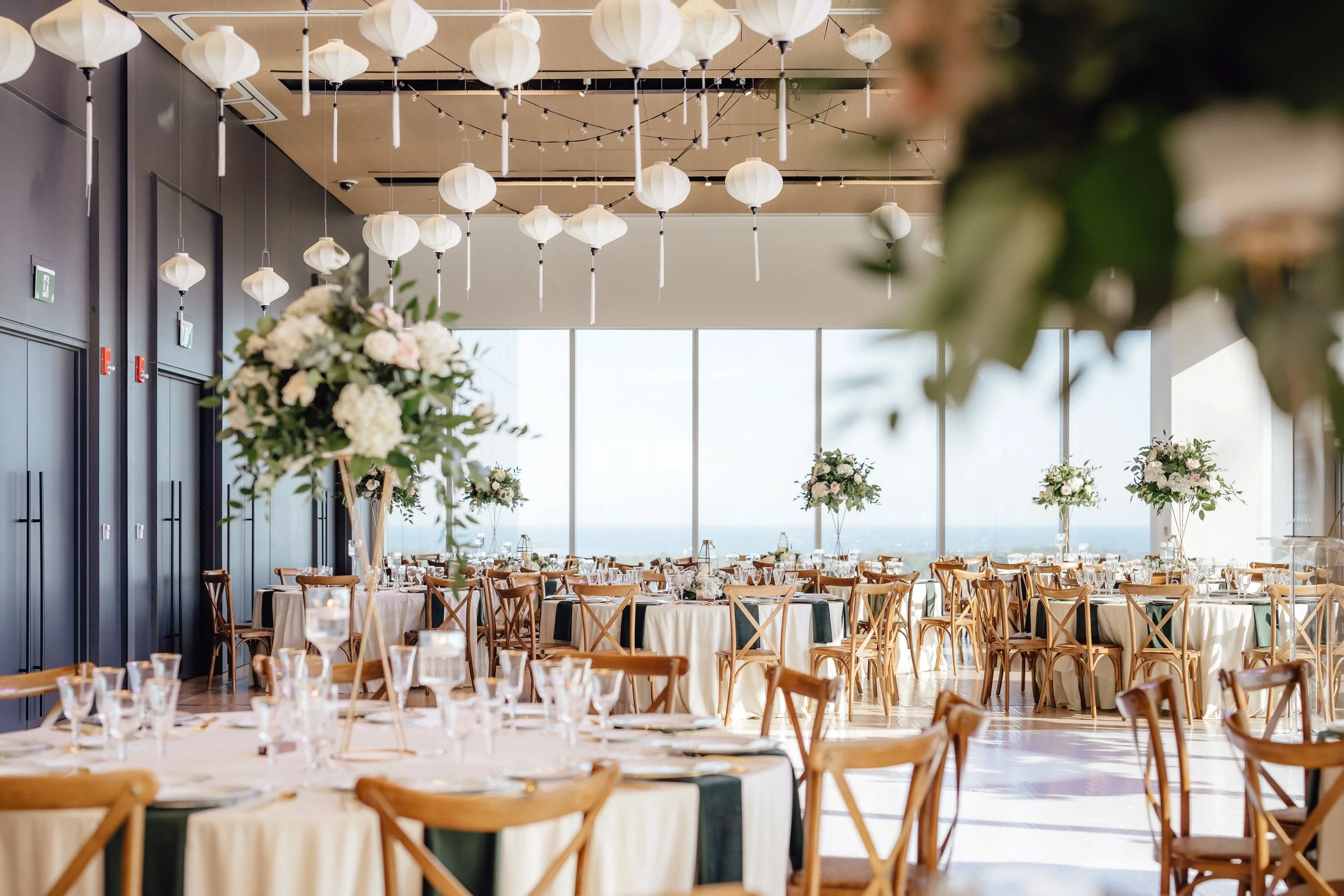
Protecting Time for the Couple Throughout the Day
One of the things we're always looking for when building a wedding itinerary is where we can give our couples a little breathing room. Wedding days are exciting, but they're also super busy, especially when you're celebrating two ceremonies in one day. We want you to have opportunities to slow down, enjoy yourselves, and actually take in what's happening around you.
Some parts of the day, like ceremony start times and dinner service, need to stay on schedule. Other parts give us a little more flexibility, and that's where we can be intentional about building in some downtime. If you're changing outfits between ceremonies, for example, we'll throw in a little extra time so you can grab a snack, have something to drink, and sit down for a few minutes before getting up and going again.
We also love carving out time for couples to enjoy their portraits together without their entire wedding party or family tagging along. It's a chance to spend some time alone together, even with your photography and cinema team nearby, before heading back into the celebrations. You’d be surprised at how little alone time you have with your new spouse on your wedding day.
Cocktail hour is another solid opportunity for a break. We’ll encourage our couples to sneak away to their wedding suite for a little while, enjoy a drink and a plate of appetizers, and just relax. If the timing works out, we’ll also arrange a private first look at the reception space before guests are invited in, which is always such a lovely moment after months of planning and design.
These little pockets of downtime might not seem like much on paper, but they can make a real difference in how you experience your wedding day. We want you to remember more than just moving from one timeline milestone to the next!
When Two Ceremonies Shouldn't Happen on the Same Day
Planning two ceremonies in one day can work really well, but there are a few situations where the logistics, cultural considerations, or overall guest experience make a two-day celebration a much better option.
For some families, hosting a reception with alcohol, meat, or certain types of entertainment immediately following a religious ceremony may not be appropriate. These expectations can vary even within the same community, so we encourage couples to sit down and have those conversations with their families and officiants early on so everyone is on the same page.
Distance between venues is also a big factor. We once worked with a couple who wanted a three-hour Hindu ceremony at a temple in Richmond Hill, followed by a Western ceremony and reception in Hamilton. By the time we accounted for lunch, outfit changes, travel, and the second ceremony, it was shaping up to be an insanely long day for everyone, and especially the wedding party and couple. Instead, we recommended hosting the Hindu ceremony around midday, followed by a leisurely post-ceremony meal with a small program at the temple, and then the Western ceremony and reception taking place the next day. This gave the couple more time with their guests and the flexibility to invite a larger group to the temple wedding while keeping their reception more intimate. Sometimes, it just comes down to wanting a more relaxed experience, and there is nothing wrong with that - you can choose a structure that feels right for you and your guests.
Bringing Two Wedding Traditions Together Thoughtfully
Bringing two wedding traditions together in one day can be a great experience, especially when there's enough time for everyone to enjoy each part of the day without feeling rushed.
We've found that the most successful two-ceremony weddings are the ones where the itinerary is considered early, alongside the venue, floor plan, design, and overall guest flow and experience. Having those conversations from the start gives us the time and flexibility to work through the logistics, consider important traditions, and build in the little moments of hospitality and downtime that make such a difference to how the day actually feels vs. how it looks on paper.
If you're planning a multicultural or fusion wedding in Toronto or beyond, we'd love to help you bring it all together. At Events by Whim, our full-service wedding planning approach combines thoughtful design, detailed coordination, and a genuine appreciation for the traditions and people that make your celebration uniquely yours.