
How to Build a Wedding Timeline That Lets You Stay Present
Cornerstone Conversation
How to Build a Wedding Timeline That Lets You Stay Present
When couples first begin planning their wedding day, a question that is frequently asked is, "How do we fit everything into the timeline?" It's an understandable place to start because thinking of the entire day is usually overwhelming. Between getting ready, transportation, portraits, a ceremony, cocktail hour, dinner, speeches, dancing and countless smaller moments in between, it's easy to feel like every minute needs to be accounted for. The timeline quickly becomes a puzzle where the goal is to make everything fit.
At Events by Whim, we think there's a better question to ask. Instead of asking how much you can fit into your wedding day, ask yourself how you want your wedding day to feel.
Those two questions produce very different timelines. One focuses on productivity, and the other focuses on experience. One creates a schedule that moves efficiently from one event to the next. The other creates a wedding that allows you to slow down, connect with your guests, appreciate the significance of the day and actually remember living it.
Years from now, you won't remember whether dinner began twelve minutes earlier or later than originally planned. You'll remember hugging your grandparents after the ceremony. You'll remember sharing a quiet laugh with your new spouse before walking into your reception. You'll remember finally seeing all of your favourite people together in one room. Those are the moments that become your memories, and they're the moments your timeline should be designed to protect.
Photography by Scarlet O’Neill
Your Wedding Timeline Isn't Just a Production Schedule
A big misconception about wedding planning is that the timeline exists to keep everyone on schedule. While a well-organized timeline certainly helps your photographer, caterer, entertainment team, and venue operate efficiently, that's only one part of its purpose. A thoughtfully designed timeline should first and foremost support the people it was created for: the two of you. This is where experience begins to outweigh efficiency.
A productive timeline can easily become an exhausting one if every available minute is filled with another photograph, another performance, another location or another obligation. Couples assume that because something can fit into the day, it should. The reality is that every addition asks something else to give way. More portrait locations mean less time with guests. Additional speeches change the pace of the evening dinner service. Another performance may be incredibly meaningful, but it still requires time that would otherwise be spent celebrating with family and friends.
None of those decisions are inherently right or wrong. Every wedding is different, and every couple has their own priorities. Our role isn't to tell couples what they should eliminate. Our responsibility is to help them understand the trade-offs each decision creates so they can build a day that reflects what matters most to them.
This is why we don't begin timeline conversations by asking how many speeches you'd like or how many portrait locations you have in mind. We begin by asking what you hope you'll remember when the wedding is over. Once we understand those priorities, every recommendation that follows has purpose.
Photography by Nadtochiy Photography
Every Great Wedding Timeline Creates Two Types of Space
When we hear the word "space," in relation to a wedding timeline, we often imagine empty time that could be used more efficiently. As wedding planners, we think about it differently. Every successful wedding timeline contains two very different kinds of space, and both are equally important.
The first is operational space. These are the buffers built quietly into the back end of the wedding day that most couples never notice because, when they're working properly, nothing feels delayed. Hair and makeup almost always takes a little longer than expected. A needed family member steps away just as portraits are about to begin. Traffic slows the drive between venues. A dress bustle needs another few minutes. None of these moments are unusual. They're simply part of hosting a live event with dozens, and sometimes hundreds, of people.
Rather than pretending or hoping that those things won't happen, we plan for them. We intentionally build additional time around transportation, transitions and getting ready so that a ten-minute delay doesn't create a ripple effect for the rest of the day. Those buffers aren't wasted time. They're one of the reasons a wedding can still feel calm even when small surprises inevitably arise.
The second type is intentional space. These are the moments that don't exist to accomplish anything. There isn't a photograph being taken, a guest waiting to be greeted, or a vendor looking for the next cue. Their purpose is simply to give you permission to experience your wedding while it's happening. They create opportunities to breathe, reconnect and appreciate what you've spent months planning. In our experience, those are often the moments couples remember most vividly.
One of the Most Important Moments of the Day Isn't on the Photography Timeline
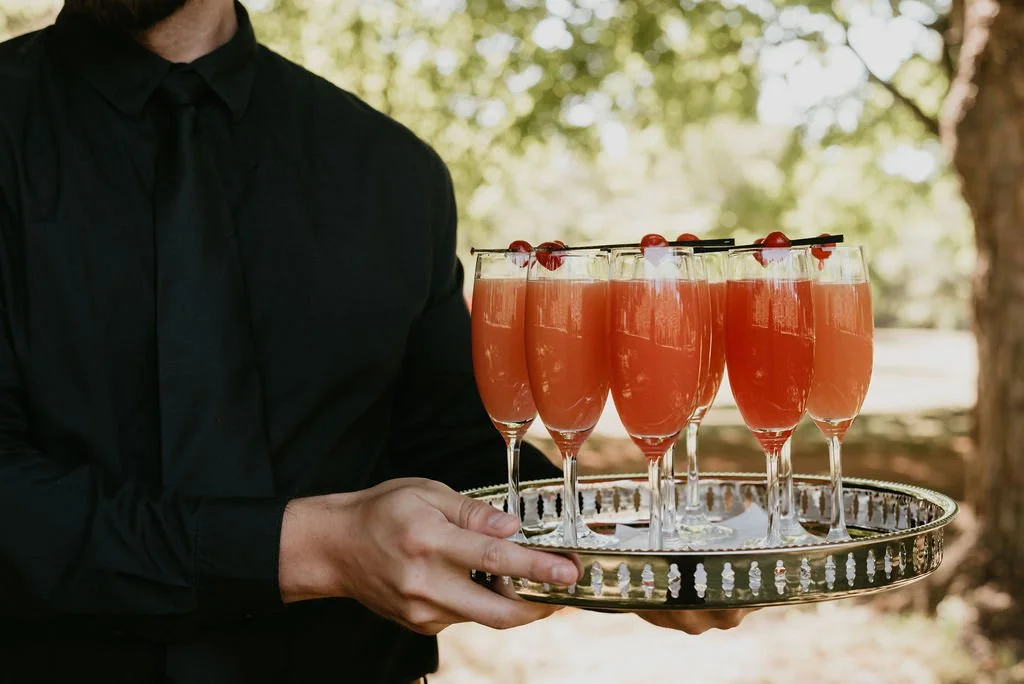
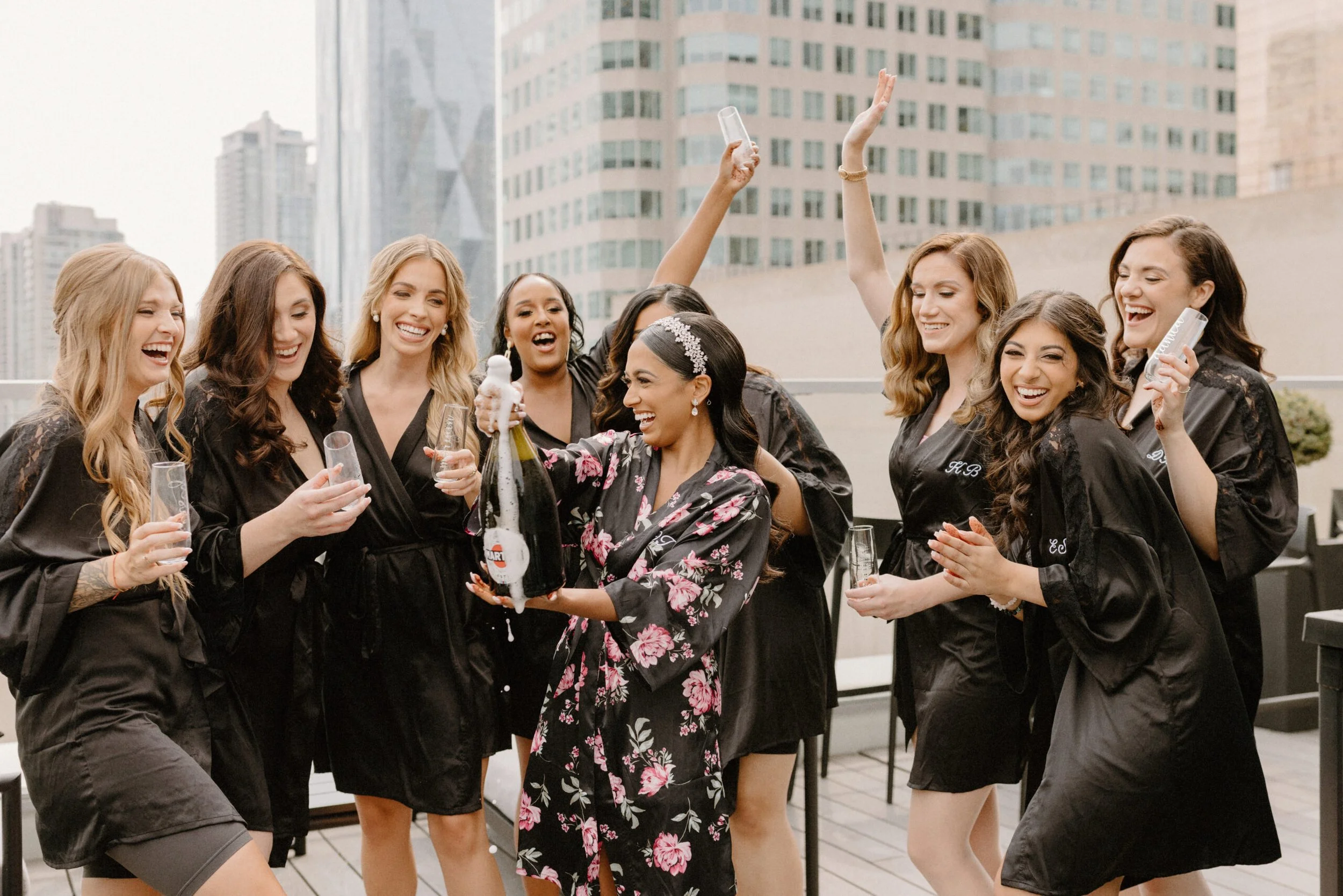
One of our favourite moments to build into a wedding day happens immediately after the ceremony. While guests begin making their way to cocktail hour, we often invite our couples back to their suite where a glass of champagne, their signature cocktail or a few favourite hors d'oeuvres are waiting for them. There are no cameras, no formal photographs to capture and no expectations beyond taking a deep breath together. Sometimes they're there for five minutes, sometimes they stay for half an hour. The amount of time isn't what matters. What matters is that it's often the first opportunity they've had all day to simply be married and be alone together to catch their breaths.
Throughout the months leading up to the wedding, couples spend countless hours making decisions, considering logistics and thinking about everyone else. The wedding day itself can quickly become a blur of hugs, introductions, photographs and celebration. Without intentionally protecting a few quiet moments, it's surprisingly easy to reach the end of the evening and realize you never truly paused to take it all in.
Those few uninterrupted minutes together become an anchor. Couples laugh about what happened during the ceremony. They replay favourite moments. Sometimes they cry. Sometimes they sit in complete silence while the excitement of the day slowly settles in. It's one of the few moments during the entire celebration where nothing is expected of them except to enjoy the fact that they're finally married. Ironically, this is one of the moments that never appears in a wedding album, yet it often becomes one of the memories couples speak about most fondly afterwards. That is exactly why we protect it.
Photography by Mango Studios
Every Timeline Decision Has a Trade-Off
One of the most valuable conversations we have with our couples isn't about what should or shouldn't be included in their wedding day, but rather it's about understanding what each decision requires in return. Time is a finite resource, especially on your wedding day. Every addition to your timeline asks something else to move, become shorter or disappear altogether. Understanding those trade-offs allows you to make intentional decisions rather than accidentally sacrificing the moments you'll value most.
Photography is one of the clearest examples. If your timeline includes three or four portrait locations across the city, we'll have a conversation about what that means for the rest of your day. Every additional location requires transportation, parking, unloading, walking and transitioning your photography team, wedding party and often your immediate family. Thirty minutes of travel rarely remains just thirty minutes by the time everyone is moving together.
Rather than simply asking whether another location would create beautiful photographs, we'll ask a different question: What part of your wedding day are you comfortable giving up to create that opportunity?
Sometimes the answer is an easy one because the photographs are incredibly important to the couple. Other times, couples realize they'd rather spend that extra half hour enjoying cocktail hour with their guests or having an uninterrupted conversation together before entering their reception. Neither decision is wrong. The important thing is understanding the choice you're making and whether it lines up with the values you have for your own wedding.
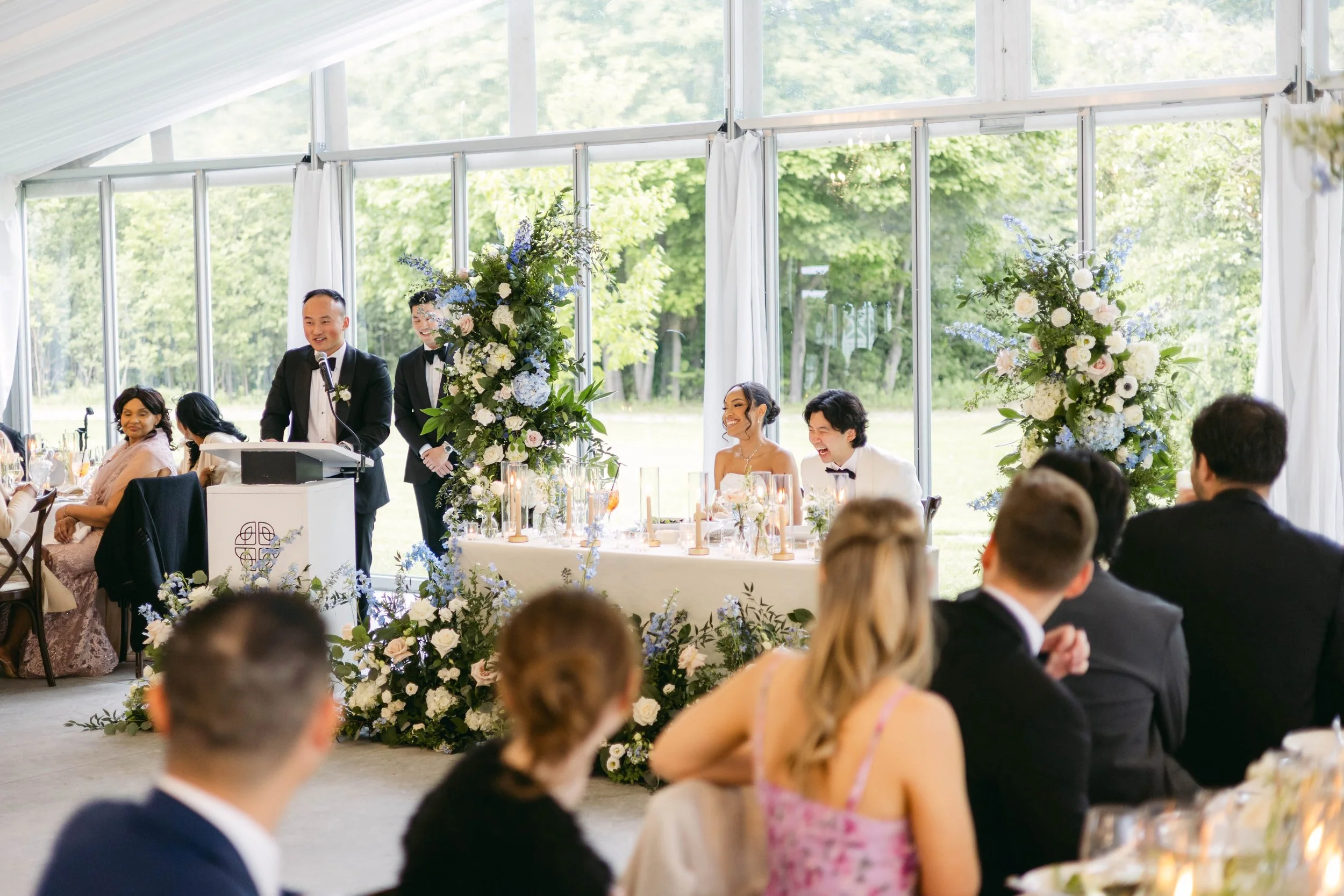
The same philosophy applies to speeches, performances and traditions. A family may have six people hoping to speak during dinner, and every speech may be heartfelt and meaningful. Instead of immediately suggesting that speeches be removed, we'll often look for opportunities to preserve the sentiment while improving the experience. Perhaps two siblings speak together. Perhaps a group of lifelong friends shares one toast instead of four individual ones. The sentiment remains exactly the same, but the evening maintains its rhythm and allows guests to stay engaged.
So to be clear, this isn't about saying no, it's about making room for the moments that matter most.
Photography by 515 Photo Co
Why We Often Recommend a First Look
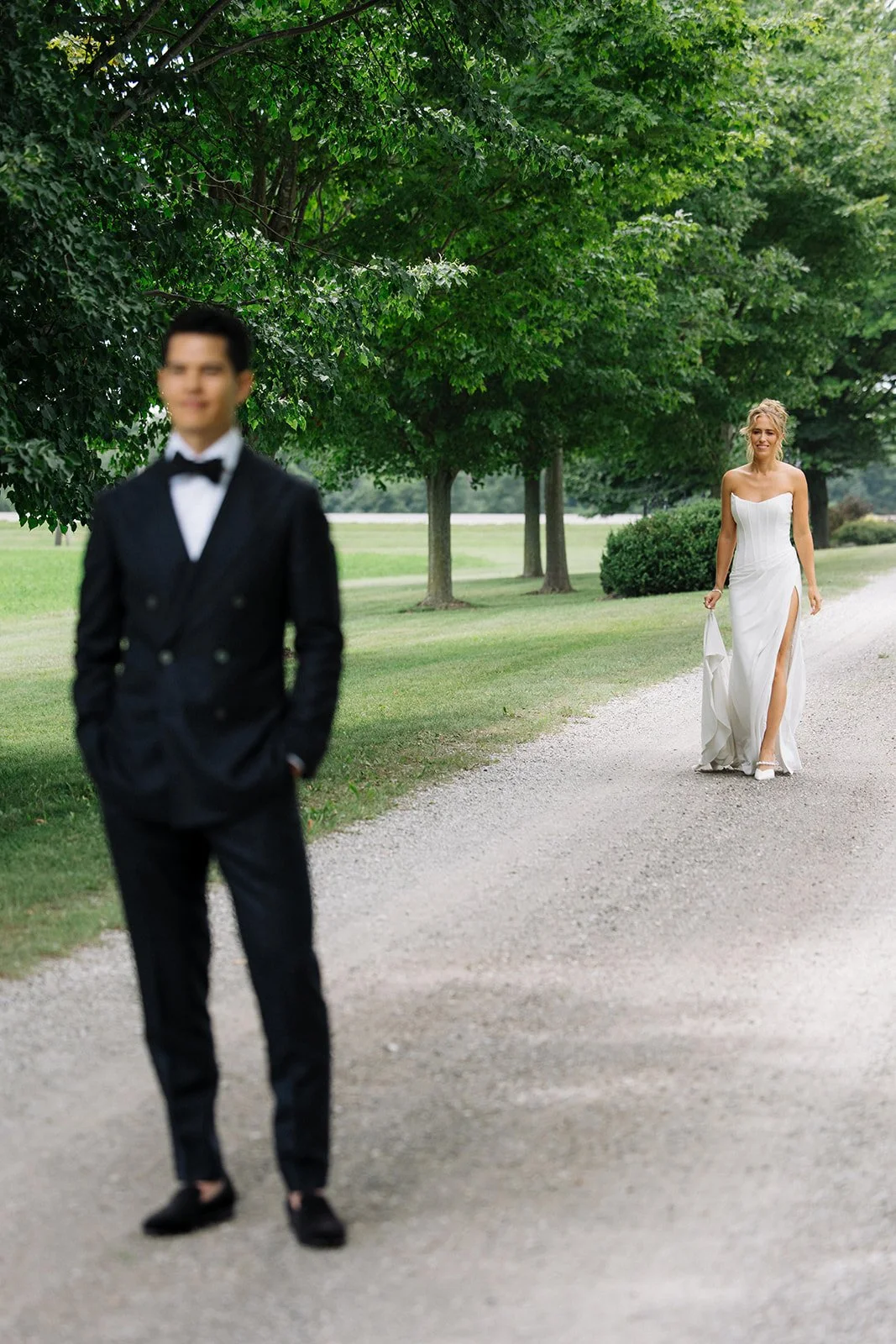
One of the recommendations we make most frequently is also one of the most misunderstood. If a couple has a strong religious, cultural or personal belief that they don't want to see one another before the ceremony, we completely respect that decision. There is something incredibly special about seeing your partner for the first time as you walk down the aisle, and we'll happily build a timeline that preserves that moment.
If a couple is open to a first look, however, we'll almost always recommend considering it. Not because it's more efficient, but because it protects presence.
Completing your couple portraits, wedding party photographs and many of your immediate family photographs before the ceremony changes the rhythm of the entire day. Instead of spending your cocktail hour working through an extensive formal photo list, you're free to do what cocktail hour was originally designed for.
You get to celebrate. You get to hug the university friend who flew across the country to be there. You get to introduce childhood friends to work colleagues who have heard stories about one another for years. You get to taste the signature cocktail you spent months perfecting. You get to thank your grandparents before other guests surround them. Most importantly, you get to experience the energy in the room while everyone is still arriving, excited to celebrate with you.
We still love creating opportunities for couples to step away for a few private portraits throughout the day. Sunset portraits are often among our favourites because they feel relaxed, intimate and authentic. The difference is that those photographs become intentional pauses rather than obligations that consume your entire cocktail hour.
Photography by Shae & Evan
The Best Wedding Timelines Protect More Than a Schedule
The difference between a good timeline and a great one is that a great timeline is designed around priorities rather than activities. When we begin building a wedding timeline, we aren't simply placing events into chronological order. We're asking a series of questions that help us understand what deserves protection:
What moments will matter most twenty years from now?
Where will you naturally want to spend more time?
Which traditions are deeply meaningful, and which are simply there because you've seen them at other weddings?
How can we make sure the two of you actually experience the celebration you've spent months planning?
Sometimes the answer is building additional buffer around transportation because we'd rather have you arrive calm than stressed. Sometimes it's recommending a first look so cocktail hour belongs to you instead of your photography schedule. Sometimes it's encouraging you to reduce the number of portrait locations or consolidate several speeches into one shared moment so dinner maintains its energy.
Every recommendation comes back to the same philosophy: Protect the experience first, and everything else follows.
Photography by Shae & Evan
The Best Wedding Timelines Protect More Than a Schedule
The greatest compliment we can receive after a wedding isn't that dinner started exactly on time or that every event happened precisely according to schedule. It is hearing a couple say they truly enjoyed their wedding. They weren't rushing from one obligation to the next. They had time to celebrate with the people they love, and they felt present.
When our couples tell us they had the best day of their lives, we know everything happening quietly behind the scenes worked exactly as it should have. The transportation buffers did their job. The transitions felt effortless. Vendors knew where they needed to be. The timeline supported the celebration without ever becoming the focus of it.
That's ultimately what thoughtful planning should do. A timeline shouldn't simply tell you where to be next but rather, it should quietly create the conditions for unforgettable memories.
Years from now, you'll probably never remember whether cocktail hour lasted seventy-five minutes or ninety. You won't remember whether dinner began at 6:37 p.m. or 6:44 p.m. You'll remember sharing a quiet glass of champagne after the ceremony. You'll remember hugging people you hadn't seen in years. You'll remember looking around the reception room and realizing every person who shaped your life was celebrating together. Those memories don't happen by accident. They happen because someone intentionally made room for them and that's the kind of wedding timeline we believe in.
Ready to Build a Wedding Day You'll Actually Get to Experience?
Every couple's priorities are different, which means every timeline we create is different too. Rather than beginning with a template, we begin with your story, your traditions and the moments that matter most to you. From there, we thoughtfully design a wedding day that feels relaxed, intentional and centred around the experience you want to create for yourselves and your guests.
If you're planning a wedding in Toronto or beyond and you're looking for a planning team that believes the best weddings are experienced, not simply executed, we'd love to start that conversation.